_edited.png)


From the Archive: The Oil Region On Track
From the Venango Museum's Archive
Originally published in an earlier Venango Museum series. This edition has been revised and updated for 2026.
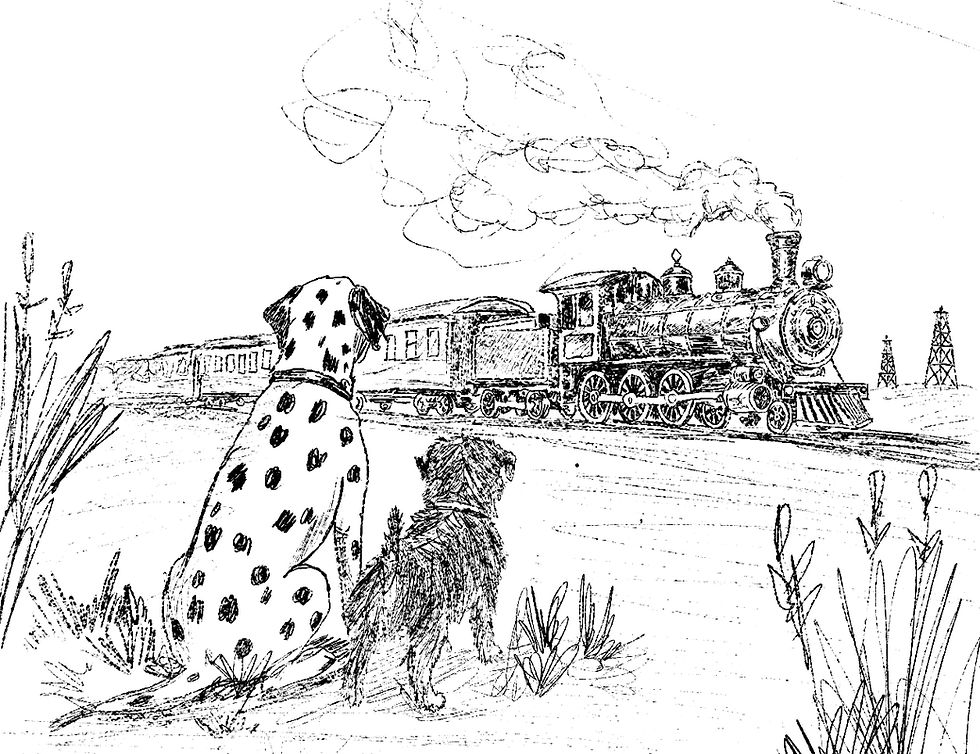
The oil boom started underground, but its impact quickly reached much farther.
Once oil was taken from the hills and valleys of northwestern Pennsylvania, it needed to be transported. It moved from wells, tanks, creek banks, and muddy roads to refineries, cities, factories, ports, and customers far beyond the Oil Region¹. This movement transformed Venango County.
In the early days of the boom, people moved oil however they could. Barrels traveled by wagon, and boats carried crude down Oil Creek and the Allegheny River when the water was high enough. River transport moved a lot of oil from Oil City to Pittsburgh.² Even so, moving oil was often difficult, temporary, and unreliable.
The oil industry couldn’t remain just a local rush. To become a national business, petroleum needed larger means of transportation. It needed railroads.
By the late 1800s, Oil City was more than a place to store, trade, refine, and ship oil. It had become a railroad town. Tracks ran through valleys, bridges crossed rivers, and tunnels cut through hills. Stations and depots bustled with passengers, workers, freight, mail, baggage, and lots of noise. Oil made railroads vital for the region’s growth. In turn, railroads carried oil out to the wider world.
Oil City on the Map
Railroads changed Oil City’s future. The oil boom had already made the region well known. Wells, tanks, derricks, refineries, and storage yards drew attention to northwestern Pennsylvania. But producing oil was only part of the story. It also had to be moved from where it was found to where it could be refined, sold, and used.
Railroad promoters saw how important the region was. A nineteenth-century Atlantic and Great Western Railway publication called Venango County “the centre of the great oil business of Pennsylvania.”³ This description meant more than just wells. It was about connection.
By the 1860s, railroads were linking Venango County to larger transportation networks. The Atlantic and Great Western brought rail service to the Franklin area, while other lines connected Oil City and nearby oil towns to bigger routes.³ Oil City became a key spot in that system.
Rail lines connected the town to nearby oil fields, storage areas, river routes, and larger markets. The Allegheny Valley Railroad went north into the Oil Region and reached Venango City, just across the Allegheny River from Oil City, in 1868. Venango City later became part of Oil City’s South Side.⁴
These connections changed things. Oil that once came from narrow Pennsylvania valleys could now reach a much wider world of refining, business, investment, and use. A barrel of crude oil was no longer stuck in the valley where it was made. Once it entered the railroad network, it became part of something larger.
Oil still came from the ground, but more and more, its future depended on how it was moved.
A Town Built Around Movement
Oil City became a place where people and goods came and went. Trains arrived from big cities and nearby towns, then left for other places. Freight moved through yards and depots. Workers changed crews. Passengers got on and off. Mail, baggage, equipment, goods, and oil all passed through the town.
For people living there, the railroad was more than part of the oil business. It became part of everyday life. People took trains to shop, visit family, travel for work, go to events, or leave home. Goods arrived by rail. Letters and newspapers came in by train. Many workers depended on the railroad for steady jobs. Local farmers, merchants, hotels, boarding houses, and shops all benefited from the steady flow of people and goods.
The railroad station was Oil City’s connection to the outside world. Families met there to greet arrivals or say goodbye to travelers. Newcomers showed up with suitcases, tools, plans, and hopes. Freight came in, oil went out, and news moved both ways. In an oil town, the station was more than just a stop. It was a gateway.
Tracks, Bridges, and Tunnels
Railroads changed the shape of Venango County. They followed rivers and valleys because the land was hard to cross. Railroads spanned waterways, cut through hills, and made new paths in a region already changed by oil.
Railroad bridges crossed the Allegheny River. Tunnels ran through the hills. Rail lines linked stations, warehouses, storage sites, and industrial areas. Sanborn fire insurance maps of Oil City show how tracks, railroad buildings, industrial sites, and oil-related spaces were built into the city by the late 1800s and early 1900s.⁵
This was a different kind of oil landscape. When people picture the early oil boom, they often see derricks, those wooden towers crowded on hillsides and creek banks. But the railroad landscape was something else. It was made of iron rails, bridges, tunnels, signals, switches, freight platforms, smoke, steam, schedules, and waiting rooms.
The oil boom changed how people saw the land. The railroads changed how far the land could reach.
Oil Takes To The Rails
Railroads didn’t replace older ways of moving oil right away. Wagons were still important, and rivers were still used. Pipelines would later become one of the main ways to move petroleum. But railroads helped solve one of the oil boom’s biggest problems: distance. Oil had to travel farther than just the valley.
Railroads connected Venango County’s wells, storage sites, and shipping centers to refineries, factories, ports, and city markets. They helped turn local oil into part of the national economy. Oil made in one place could now be refined, sold, and used far away.
This changed what Oil City was. It was no longer just a town near the wells. It became a shipping hub and a place where oil joined larger networks of trade and transportation. The city had long been known as a shipping point for crude oil from the Oil Creek fields.² Oil moved through Oil City, and so did people, money, workers, equipment, information, and opportunity.
By the twentieth century, transportation changed again. Pipelines, cars, trucks, and better highways changed how people and goods traveled. Passenger rail service declined across the country, and Venango County experienced the same thing. On June 9, 1953, passenger trains stopped running between Oil City and Corry, ending an important chapter in local railroad history.⁶
But the railroad stayed part of the Oil Region’s story. The oil boom made Venango County famous for what was found underground. The railroads helped decide where that oil would go.
For a time, the sounds of the Oil Region included more than drilling tools, Oil Creek, or wagons in the mud. It was also the sound of train whistles, the hiss of steam, and the rumble of train cars moving through the valley. Oil was now moving by rail.
Discover more stories from the Oil Region at the Venango Museum in Oil City, Pennsylvania.
Sources
Williamson, Harold F., and Arnold R. Daum. The American Petroleum Industry: The Age of Illumination, 1859–1899. Northwestern University Press, 1959.
Encyclopedia Britannica. “Oil City.” Encyclopedia Britannica.
The Atlantic and Great Western Railway. Nineteenth-century railway publication, c. 1860s.
Schusler, W. K. “The Railroad Comes to Pittsburgh.” Western Pennsylvania Historical Magazine.
Sanborn Map Company. Sanborn Fire Insurance Map from Oil City, Venango County, Pennsylvania. Library of Congress Geography and Map Division, 1886, 1891, 1895, 1906, and 1913.
Pennsylvania Railroad Technical & Historical Society. Pennsylvania Railroad Chronology, 1953.
Venango Museum archival research notes and earlier compiled blog materials.


Comments