_edited.png)
The Ground Became A Gamble
Updated: May 18
Oil Region Tales — Episode 3
Listen to Episode 3
What happened when ordinary land suddenly looked like a fortune? After 1859, farms, creek banks, and wooded hillsides in Pennsylvania’s Oil Region became part of a speculative rush, as leases, wells, and reports of new strikes turned the ground itself into a gamble.
Listen to Episode 3 of Oil Region Tales:

Pennsylvania’s oil boom started not just with wells, but with land.
When Edwin Drake struck oil near Titusville in 1859, farms, creek banks, wooded hillsides, and regular plots of land suddenly seemed different. Land once valued for crops, timber, pasture, or water could now be worth much more because of what might be underground.¹ In Venango County, this changed almost everything.
The oil boom made the land itself a gamble. Before anyone knew if a well would work, people bought leases, traded shares, started companies, and hurried to get involved in the chance for oil.²
Some people got rich. Many did not. But for a few intense years, almost everyone wanted a share of the boom.
Before the Well Came the Deal
People in the region knew about oil long before Drake’s well. Indigenous groups and later Euro-American settlers saw oil seeping from the ground and floating on streams. After 1859, though, oil stopped being just a curiosity or medicine. It turned into a business.¹ And that business needed land.
Drillers and investors rushed into the Oil Creek valley and nearby areas, seeking leases from farmers and landowners. These deals let companies or individuals drill, usually in return for payments or a share of the oil produced.²
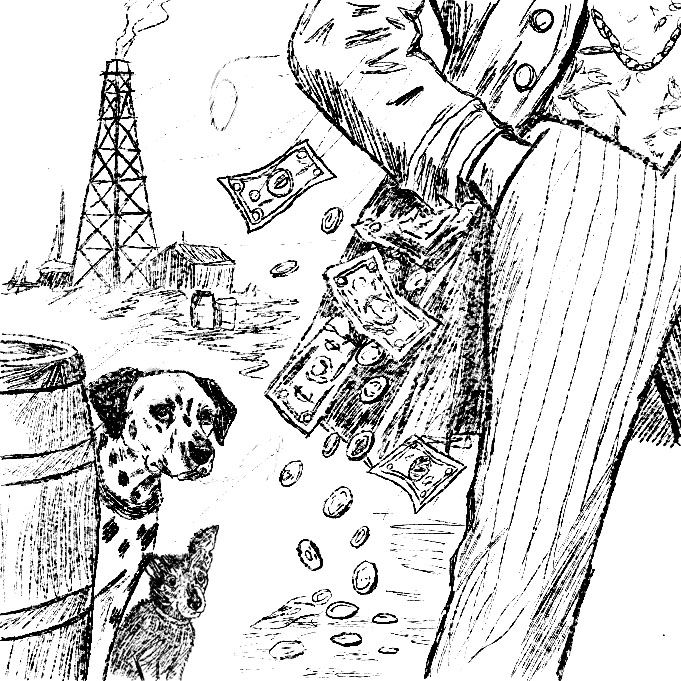
For landowners, this could change everything. A farm that once offered only a modest living might suddenly earn royalties from oil wells. The McClintock farm near Rouseville, later tied to the story of Coal Oil Johnny, became a famous example of ordinary land turning extremely valuable.³
Other pieces of land changed value just as quickly. Near the Sherman well on the Foster farm, four acres reportedly sold for $220,000. This shows how fast regular land could become part of a speculative rush.⁷
Leasing land came with risks, too. A lease might bring in money for a landowner, but the boom's fast pace and uncertainty made bad deals more likely. The rush rewarded those who acted quickly, but speed often came at the expense of caution.²
In the early days of the Oil Region, opportunity and confusion showed up side by side.
Everyone Had Something to Sell
The oil boom didn’t just make oilmen. It brought jobs for teamsters, barrel makers, blacksmiths, carpenters, refiners, merchants, hotel owners, boardinghouse keepers, speculators, and newspaper publishers. People who never drilled a well could still earn money from those who did.⁴
A successful well needed tools, timber, workers, barrels, storage, transport, food, lodging, and contracts. Even a failed well needed most of these things.⁴ So, the boom’s effects spread far beyond the oil derrick.
Farmers sold leases. Merchants sold supplies. Teamsters dragged barrels through the mud. Hotels filled up with newcomers. People wrote contracts, traded leases, and newspapers ran ads and stories about new oil strikes. Towns sprang up, hoping the next well would be a big success.²
Some people arrived looking for work. Others came to invest. Some just showed up because everyone else was coming.
In the Oil Region, news of new oil strikes could quickly shift where money flowed. A productive well could boost land values nearby, while a dry hole could dash hopes just as fast. Sometimes, the line between fortune and failure came down to being close to a strike, good timing, or making a deal too soon.⁷
Boom Fever
In the early days of the oil industry, there were hardly any rules. This made things exciting but also risky. Wells were often drilled close together. Production levels went up and down. Prices shifted. Moving oil was tough. Fires happened often. As money started to flow, contracts, ownership, and royalties became more important.¹
People weren’t just taking chances on oil itself. They were also betting on timing. If you bought in before oil was found, you could get rich. If you bought after the excitement faded, you might end up in debt. Leasing the right piece of land could change your life, but picking the wrong one often led to disappointment.²
This was the world that gave rise to stories like Coal Oil Johnny. It also attracted outsiders, including John Wilkes Booth, who came to Venango County hoping to strike it rich with oil before he became known for assassinating Abraham Lincoln.⁸
That’s why stories from the oil boom can seem larger than life. The money, danger, and hope were all real. But so was the uncertainty. Sometimes the ground gave up oil suddenly. Other times, it gave nothing at all.
What the Boom Did to People
The first oil boom changed not only how people saw the land, but also how they saw each other. Neighbors could become business partners. Strangers might turn into investors. A farmer could get rich from a lease. A young man might inherit royalties and become known for how he spent them. Towns could spring up almost overnight and vanish just as quickly.³
Oil was more than something found underground. It changed daily life by making sudden change possible. This chance for change was powerful. It brought jobs, money, new ideas, and movement. But it also brought stress, speculation, waste, conflict, and loss. The same boom that made fortunes also served as a warning.⁵
In Venango County, people saw that hidden wealth could change a place before anyone really understood what was going on. The Oil Region grew from oil, but also from hope. Every lease raised questions. Every well was a gamble. Every report of a new find could mean profit or loss.
Before pipelines, big companies, and rules shaped the industry, people stood on regular ground and wondered what might be hidden underneath.⁵ ⁶
For a while, that was enough to change the world.
Discover more stories from the Oil Region at the Venango Museum in Oil City, Pennsylvania.
Sources
Paul H. Giddens, The Birth of the Oil Industry (New York: Macmillan, 1938).
Samuel P. Bates, History of Venango County, Pennsylvania (Chicago: Warner, Beers & Co., 1880).
Samuel P. Tait Jr., The Wildcatters: An Informal History of Oil-Hunting in America (Princeton: Princeton University Press, 1946).
John J. McLaurin, Sketches in Crude-Oil: Some Accidents and Incidents of the Petroleum Development in All Parts of the Globe (Harrisburg, 1896).
Ida M. Tarbell, The History of the Standard Oil Company (New York: McClure, Phillips & Co., 1904).
American Chemical Society, “Development of the Pennsylvania Oil Industry.”
American Oil & Gas Historical Society, “Early Wells of Oil Creek.”
American Oil & Gas Historical Society, “The Dramatic Oil Company.”
Pennsylvania Historical & Museum Commission, “Pithole or Bust!”

Comments