_edited.png)
From the Archive: Get Rich Quick, Get Broke Quicker
Updated: May 3
From the Venango Museum's Archive
Originally published in an earlier Venango Museum series. This edition has been revised and updated for 2026.
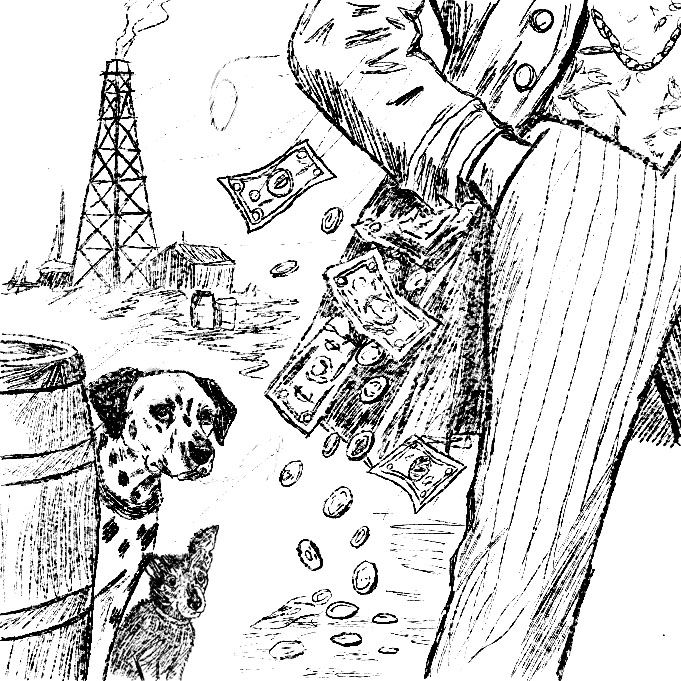
Coal Oil Johnny was one of the best-known symbols of Pennsylvania’s oil boom.
His real name was John Washington Steele, but his nickname became well known far beyond Venango County. Later generations saw him as the face of the Oil Region in the 1860s: sudden wealth, reckless spending, and fortunes that vanished as quickly as they came.¹
Behind the legend was a real young man whose life showed just how unstable the early oil industry could be.
From Farm Boy to Oil Heir
John Washington Steele was born in 1843 and adopted as a child by Culbertson and Sarah “Sally” McClintock. They lived on a farm along Oil Creek near what is now Rouseville. Their land later became some of the most valuable early oil properties in Pennsylvania.²
After Edwin Drake’s successful well in 1859 started the oil rush, drillers and speculators poured into Venango County looking for leases. The McClintocks leased out parts of their land for royalties, turning their ordinary farm into a source of great wealth.³
During these years, John worked as a teamster, hauling barrels, machinery, and supplies between wells and shipping points. He experienced the hard work of the oil fields long before he saw any of their riches.
In 1864, Sally McClintock died from burns she suffered in a house fire. John inherited her property and the income from oil royalties.² John was barely in his twenties when he suddenly became wealthier than most Americans could imagine.
The Most Famous Spender in the Oil Region
People at the time said John inherited thousands of dollars and made huge amounts each day from oil royalties. The exact numbers are unclear, but he was definitely very wealthy.¹ He spent his money quickly and made sure everyone saw it.
Newspapers and later writers talked about his fine clothes, jewelry, cigars, expensive liquor, custom carriages, and nonstop parties. Stories spread about his big tips, free drinks, and wild nights out. Whether every detail was true or not, his reputation was set.¹
Coal Oil Johnny became more of a symbol of boomtown excess than a real person. But sudden wealth also brought opportunists, advisers, and fake friends. Later, John said many of his problems came from the people around him who encouraged his behavior.⁴
The first oil rush made some people rich, but it also gave them plenty of ways to lose their money.
Get Broke Quicker
His downfall happened almost as quickly as his rise. A big deal involving the McClintock property reportedly fell through. Creditors wanted their money, lawsuits started, and the crowds who had gathered for easy money vanished. By 1865, the man known for his lavish spending was deep in debt.¹
John eventually left the Oil Region and moved west. He later settled in Kearney, Nebraska, where he worked for the Burlington Railroad. People who knew him later described him as dependable and hardworking, and he rarely talked about his days as Coal Oil Johnny.⁴ He died in 1920, far from the valleys where his story started.⁵
His story endures because it reveals a larger truth about the first oil boom. Oil made people rich faster than most could handle. Some built lasting businesses. Others became warnings for the future.
Coal Oil Johnny became one of the most memorable of all these stories.
Discover more stories from the Oil Region at the Venango Museum in Oil City, Pennsylvania.
Sources
Paul H. Giddens, The Birth of the Oil Industry (New York: Macmillan, 1938).
Samuel P. Bates, History of Venango County, Pennsylvania (Chicago: Warner, Beers & Co., 1880).
Samuel P. Tait Jr., The Wildcatters: An Informal History of Oil-Hunting in America (Princeton: Princeton University Press, 1946).
John Washington Steele, The Life and Death of Coal Oil Johnny (1902).
New York Times, obituary notices and retrospective references to Coal Oil Johnny, 1920–1921.
Venango Museum archival research notes and earlier compiled blog materials.

Comments